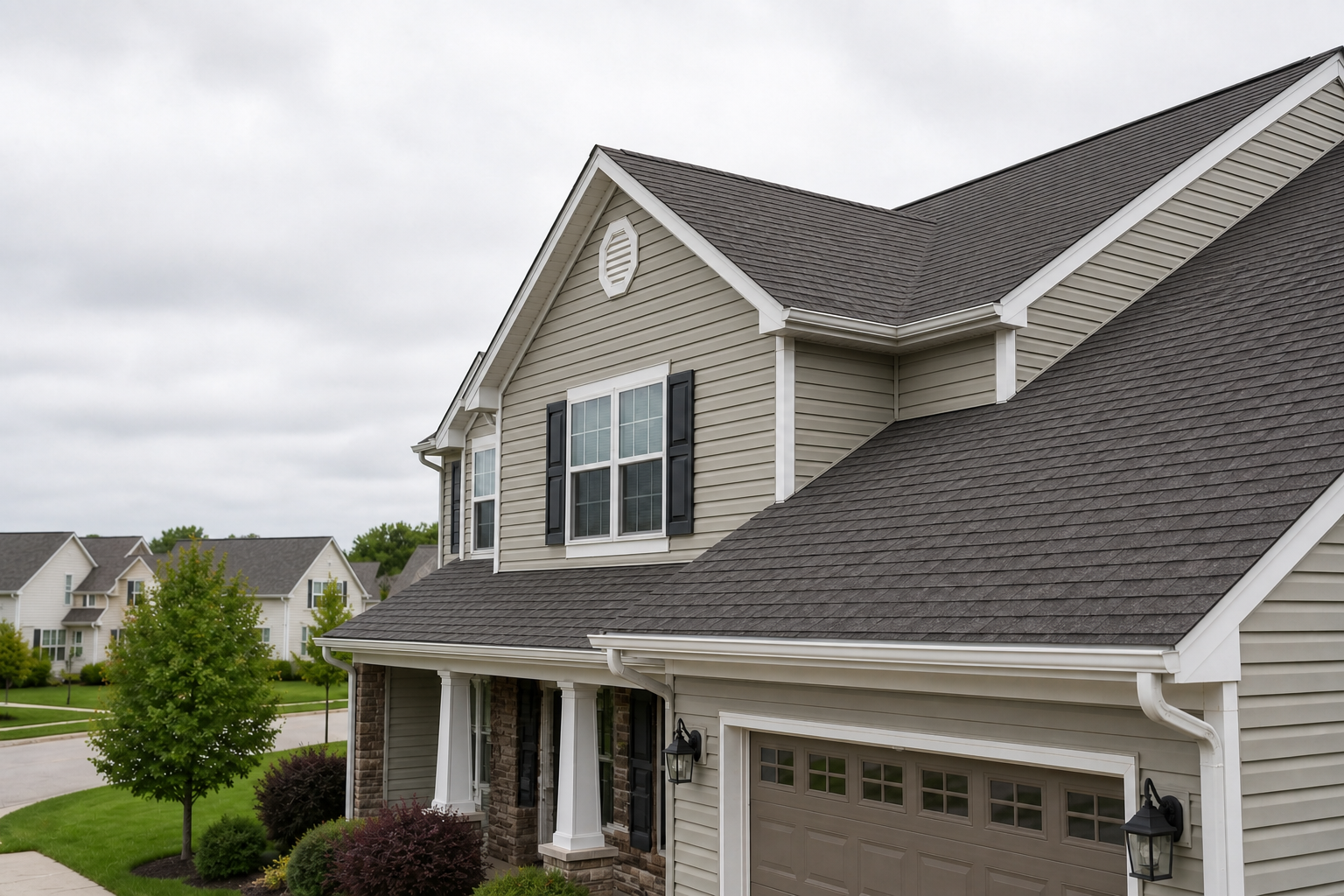
The Hampstead housing mix
Hampstead has older homes on wooded acreage further from the water and newer waterfront and near-waterfront construction along the creeks that feed toward the sound. The two types age differently. The older inland homes deal mostly with tree damage and standard wear, while the newer waterfront builds face the same salt exposure concerns seen closer to the beach towns.
Larger roofs, more complexity
Newer construction in Hampstead tends to run larger than the older housing stock, often with multiple gables, dormers and valleys on a single roof. More valleys and more flashing points mean more places for water to find a way in, so inspections here spend extra time at every valley and every roof to wall transition.
Metal roofing comes up often in Hampstead, partly because larger lots and longer driveways mean homeowners tend to plan for the long term rather than a quick resale, and a standing seam roof fits that kind of planning horizon.
Access along US-17
Properties along the highway corridor are generally easy to reach for material delivery, while homes further back on wooded lots sometimes need extra coordination for a dumpster or a boom truck to get material onto the roof without damaging the driveway or the trees along it.
Water proximity varies block by block
Hampstead is unusual in the service area for how much the salt exposure can change within a short distance. A home on a creek just off the sound needs the same fastener and flashing choices used at the beach towns, while a home a mile inland on the same road can get by with standard hardware. Each inspection here starts by placing the specific property on that spectrum rather than assuming one answer for the whole town.
Building department requirements can also vary slightly between the unincorporated areas and any nearby municipal boundaries, so the permit process is confirmed for the specific address before a job gets scheduled. That extra check takes a few minutes and avoids a delayed inspection later in the job.