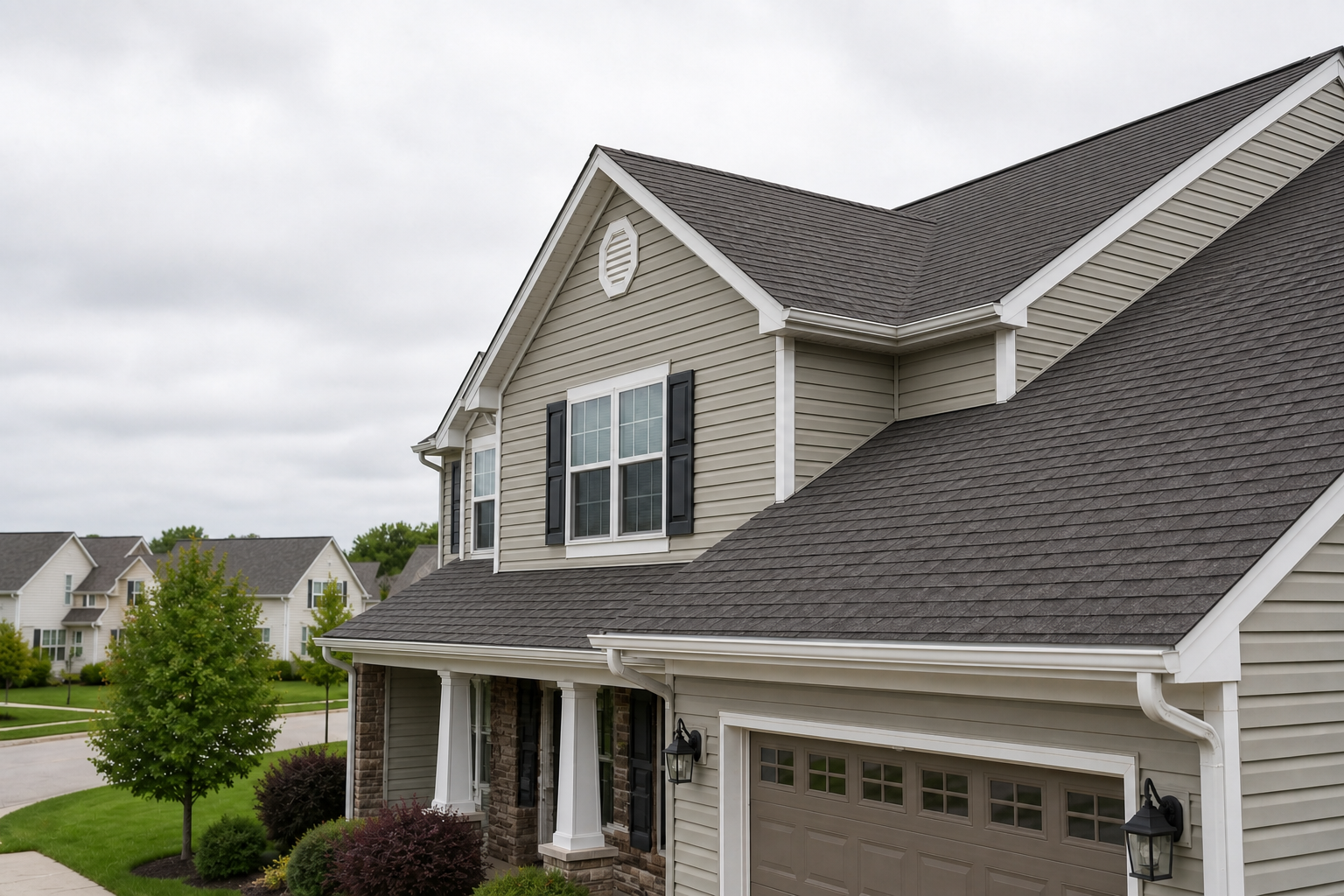
What a tropical system does to a roof
Sustained wind lifts the edge of a shingle first, and if the seal strip has already weakened from age or heat, wind driven rain gets under it within hours. Debris strikes come second, usually a limb or a piece of fencing carried by gusts strong enough to punch through decking on impact.
The third cause is water that has nowhere to go. A gutter or scupper clogged with leaves before the storm turns a heavy rain event into standing water on a low slope section, and standing water finds every weak seam within a day.
The first hours after the wind drops
Active leaks get tarped as soon as it is safe to be on a roof, which usually means waiting for sustained wind to drop below a workable speed. A tarp is only useful if it is battened at the edges and carried over the ridge, so lumber and screws go up with it, not just plastic sheeting held down with cinder blocks.
Photos get taken before the tarp goes on, and the homeowner gets copies the same day. Where a tree has come down on the roof, the tree is dealt with first and the deck underneath is checked for structural damage before any roofing work starts.
Reading the actual damage
Once the weather clears, the whole roof gets inspected, not just the spot with the obvious tarp. Storm damage often shows as a creased shingle that is still sitting in place, where the tab lifted, folded and dropped back down but the mat underneath is broken. A creased shingle looks fine from the ground and fails within a season if it is not caught.
The assessment separates storm damage from ordinary wear, because that distinction is what an insurance claim depends on. A twenty year old roof with a handful of lifted tabs is not the same claim as a five year old roof with a whole slope stripped down to the deck.
Working with the insurance claim
The written report includes the storm date, damage counts by roof slope, dated photos, and a repair scope. Adjusters typically want to know whether a slope can be matched and repaired or whether the shingle is discontinued, which can shift a claim from a repair to a full replacement. The role here is to supply accurate documentation and be available if the adjuster wants to meet on site.